
Introduction
When we think about healing, we often picture peaceful mornings, meditation cushions, gratitude journals, and calming playlists. Social media has helped popularize the idea that healing should always look gentle, graceful, and aesthetically pleasing. While those moments certainly have value, they represent only one part of a much bigger journey.
The reality is that healing is rarely comfortable all the time.
Sometimes it asks you to have difficult conversations. Sometimes it requires walking away from people you care about. Sometimes it means disappointing others so that you can finally stop disappointing yourself.
These moments don't always feel peaceful. In fact, they can feel frightening, lonely, and emotionally exhausting. Yet they are often the moments that create the deepest transformation.
Healing isn't measured by how calm you appear. It's measured by how honestly you live.
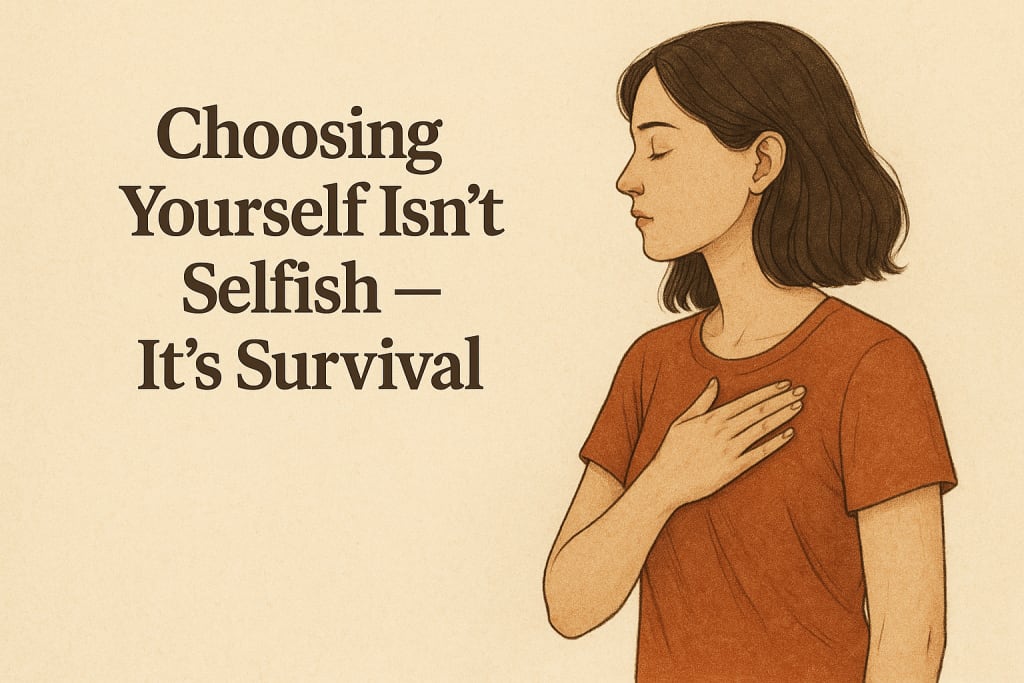
Choosing yourself isn't an act of selfishness it's an act of self-respect. It's deciding that your emotional well-being, values, and future deserve the same care you've so often given to everyone else.
In this article, we'll explore why healing isn't always soft, why choosing yourself is one of the bravest forms of self-care, and how learning to honor your own needs can lead to a healthier, more authentic life.
Key Takeaways
- Healing isn't always peaceful; sometimes it requires difficult decisions.
- Choosing yourself means honoring your needs without abandoning your compassion.
- Healthy boundaries are essential for long-term emotional well-being.
- Growth often begins when you stop living solely to meet others' expectations.
- Discomfort is frequently a sign of meaningful change, not failure.
- Sustainable healing is built through consistent self-respect rather than occasional acts of self-care.

The Myth That Healing Should Always Feel Gentle
Modern wellness culture often presents healing as something soft and soothing.
Think of images filled with candles, herbal tea, cozy blankets, and perfectly organized journals. While these rituals can certainly support emotional well-being, they don't tell the whole story.
Healing is much more than creating peaceful moments.
It's also about confronting uncomfortable truths.
Sometimes healing asks questions we'd rather avoid:
- Is this relationship still healthy?
- Am I constantly abandoning my own needs?
- Have I confused people-pleasing with kindness?
- Am I staying somewhere simply because leaving feels difficult?
These questions don't feel relaxing.
They feel disruptive.
Yet disruption is often where meaningful healing begins.
The psychology behind this is simple. Growth requires change, and change naturally creates discomfort because our brains are wired to prefer familiarity even when that familiarity isn't serving us well.
Healing doesn't always feel peaceful because transformation rarely happens inside our comfort zone.
Choosing Yourself Isn't Selfish It's Necessary
Many people struggle to prioritize themselves because they've been taught that putting others first is always the right thing to do.
Helping others is valuable.
Being compassionate matters.
But constantly placing your own needs at the bottom of the list comes with consequences.
Over time, chronic self-neglect can lead to exhaustion, resentment, and emotional burnout.
Choosing yourself doesn't mean ignoring other people.
It means recognizing that your needs matter too.
The psychology behind this shift is important. When we consistently dismiss our own needs to maintain harmony, we teach ourselves that our well-being is less important than everyone else's comfort.
Eventually, that belief becomes a habit.
Healing interrupts that habit.
It says:
"My needs deserve attention too."
That's not selfish.
It's balance.
Sometimes Healing Requires Action, Not Acceptance
We often hear that healing involves acceptance, forgiveness, and letting go.
Those practices certainly have their place.
But sometimes healing requires something much more active.
It requires saying no.
Leaving.
Speaking up.
Changing direction.
Walking away.
Imagine someone who has remained in an unhealthy workplace for years because they fear disappointing colleagues or losing stability.
Meditation may temporarily reduce stress.
But if the environment itself continues causing harm, genuine healing may require submitting a resignation rather than simply learning to tolerate the situation.
Similarly, healing from a difficult relationship may involve ending it instead of endlessly hoping it will change.
Acceptance doesn't always mean staying.
Sometimes acceptance means acknowledging reality and choosing a different path.
Growth Often Feels Messy Before It Feels Peaceful
One of the biggest surprises about healing is how untidy it can be.
Movies often portray transformation as a single breakthrough moment.
Real life rarely works that way.
Healing often involves questioning long-held beliefs, confronting painful memories, recognizing unhealthy patterns, and admitting mistakes.
That process can feel overwhelming.
Yet discomfort isn't evidence that healing is failing.
It's often evidence that healing is working.
Psychologically, our identity develops around familiar behaviors. When those behaviors begin changing even healthier ones our minds naturally experience uncertainty.
For example, someone who has always avoided conflict may initially feel guilty after setting their first boundary.
That guilt doesn't necessarily mean the boundary was wrong.
It simply means they're doing something unfamiliar.
Healing often feels uncomfortable before it feels empowering.
The Courage to Set Boundaries
One of the clearest ways we choose ourselves is through healthy boundaries.
Boundaries aren't walls that keep people out.
They're guidelines that protect our emotional well-being.
Healthy boundaries might include:
- declining commitments when you're overwhelmed,
- limiting conversations that consistently become hurtful,
- protecting your personal time,
- refusing emotional responsibilities that don't belong to you,
- asking for respect without apologizing for it.
Many people hesitate to establish boundaries because they fear appearing rude or disappointing others.
But constantly avoiding discomfort often creates even greater discomfort later through resentment, frustration, and emotional exhaustion.
Boundaries protect relationships because they prevent silent resentment from replacing honest communication.
Healing Means Letting Go of the Need to Explain Everything
Many of us feel an almost automatic urge to justify every decision we make.
We explain why we need rest.
Why we declined an invitation.
Why we changed our minds.
Why we left a situation.
Sometimes explanations are appropriate.
Sometimes they aren't necessary.
Choosing yourself often means becoming comfortable with making decisions that not everyone understands.
The psychology behind overexplaining usually stems from a desire to avoid rejection or conflict.
We hope that if we explain ourselves perfectly, everyone will approve.
Unfortunately, that rarely happens.
Healing teaches a different lesson.
You don't need universal agreement to make healthy decisions.
Respecting yourself doesn't require everyone else's permission.
Your Time and Energy Are Valuable Resources
One of the most overlooked aspects of healing is learning to protect your time.
Time isn't simply something we spend.
It's something we invest.
Where you consistently direct your attention shapes your emotional life.
Consider the difference between spending an evening:
- engaging in a meaningful hobby,
- resting after a demanding week,
- connecting with supportive friends,
versus spending the same hours trying to fix conflicts that repeatedly leave you emotionally drained.
Both require time.
Only one nourishes you.
Healing encourages intentional investment rather than automatic obligation.
Choosing yourself sometimes means recognizing that your energy deserves thoughtful stewardship.
Creating Distance Can Sometimes Be the Healthiest Choice
Not every environment supports healing.
Some spaces consistently pull us back into unhealthy habits.
This could include:
- relationships built on constant criticism,
- workplaces that ignore personal well-being,
- online communities filled with comparison,
- social circles that discourage growth.
Creating distance from these environments isn't about avoiding reality.
It's about giving yourself enough space to recover and think clearly.
Sometimes the healthiest thing you can do isn't adding something new to your life.
It's removing what continually harms it.
That space often creates room for healthier relationships, better habits, and renewed confidence.
Healing Isn't Linear And That's Completely Normal
One of the most discouraging myths about healing is the expectation of constant progress.
In reality, healing rarely follows a straight line.
Some days you'll feel hopeful, motivated, and emotionally grounded.
Other days old fears may resurface unexpectedly.
This doesn't erase your progress.
Growth often moves in cycles.
Imagine recovering from an injury.
Feeling stronger one day doesn't guarantee you'll never experience soreness again.
Emotional healing works similarly.
Setbacks aren't proof that you've failed.
They're reminders that healing is an ongoing process rather than a final destination.
The important question isn't whether every day feels perfect.
It's whether you're gradually becoming kinder, wiser, and more honest with yourself.
The Confidence That Comes From Choosing Yourself
Every time you honor your needs, you strengthen self-trust.
At first, these decisions may feel uncomfortable.
You decline an invitation because you need rest.
You leave a conversation that has become disrespectful.
You stop chasing someone who isn't meeting you halfway.
Each decision quietly reinforces an important message:
"I can rely on myself."
That confidence doesn't arrive overnight.
It's built through repetition.
Eventually, you stop seeking constant permission.
You stop overanalyzing every choice.
You begin trusting your own judgment.
This kind of confidence isn't loud.
It's steady.
And because it comes from within rather than external approval, it's remarkably resilient.
Why Choosing Yourself Sometimes Creates Resistance
An unexpected part of healing is realizing that not everyone celebrates your growth.
People who benefited from your lack of boundaries may feel uncomfortable when those boundaries appear.
Someone accustomed to your constant availability may interpret your new limits as rejection.
That reaction can feel painful.
But it doesn't necessarily mean you've made the wrong decision.
Change often disrupts established dynamics.
The psychology behind this is straightforward. People naturally adapt to patterns. When one person changes those patterns, others often need time to adjust.
Healing isn't about making everyone comfortable.
It's about becoming healthier.
If your growth occasionally disappoints people who expected unlimited access to your time and energy, that doesn't automatically mean you've become selfish.
It may simply mean you've become balanced.
Sustainable Healing Is Built One Decision at a Time
Healing isn't a weekend project.
It's not something completed after finishing a journal or attending a retreat.
It's a lifelong practice.
The most meaningful transformation usually happens through ordinary choices repeated consistently.
Choosing rest instead of burnout.
Choosing honesty instead of avoidance.
Choosing boundaries instead of resentment.
Choosing growth instead of familiarity.
None of these decisions seem dramatic on their own.
Together, they gradually reshape the way you experience life.
This consistency is what makes healing sustainable.
Rather than relying on occasional bursts of motivation, you begin building habits rooted in self-respect.
Expert Tips for Choosing Yourself Without Guilt
If you're learning to prioritize your well-being, these practices can help:
- Pause before automatically saying "yes" to new commitments.
- Ask yourself whether a decision aligns with your values or simply avoids conflict.
- Remember that disappointing someone occasionally is different from hurting them intentionally.
- Schedule regular time for activities that genuinely restore your energy.
- Notice when guilt appears simply because you're doing something unfamiliar.
- Accept that healthy relationships can withstand respectful boundaries.
- Celebrate small moments of self-respect rather than waiting for major breakthroughs.
- Treat yourself with the same compassion you naturally offer others.
Healing becomes much easier when self-respect becomes a daily habit rather than an occasional act.
Common Mistakes People Make During Healing
Believing healing should always feel peaceful
Growth often involves discomfort before it creates lasting change.
Confusing people-pleasing with kindness
Helping others shouldn't require abandoning yourself.
Expecting everyone to understand your boundaries
Not everyone will agree with your choices and they don't have to.
Waiting until burnout to prioritize yourself
Self-care is most effective when practiced consistently, not only during crises.
Thinking progress must be perfect
Healing isn't measured by flawless consistency but by continued willingness to grow.
Frequently Asked Questions
Is choosing yourself the same as being selfish?
No. Choosing yourself means acknowledging that your needs matter alongside everyone else's. Healthy self-respect allows you to care for others without constantly neglecting yourself.
Why does healing sometimes feel harder before it feels better?
Healing often involves breaking familiar patterns and confronting uncomfortable truths. That temporary discomfort is a natural part of meaningful personal growth.
How do I know if I need stronger boundaries?
If you frequently feel emotionally exhausted, resentful, or guilty for meeting your own needs, stronger boundaries may help create healthier balance.
Can healing involve ending relationships?
Sometimes. If a relationship consistently undermines your well-being despite honest communication and effort, creating distance may become part of the healing process.
Why do I feel guilty when I choose myself?
Many people have been conditioned to prioritize others first. Choosing yourself can initially feel uncomfortable simply because it's unfamiliar, not because it's wrong.
Does healing ever completely end?
Healing is better understood as an ongoing practice rather than a finish line. As life changes, new opportunities for growth naturally emerge.
Final Thoughts
Healing isn't defined by how peaceful it looks from the outside.
Sometimes it looks like quiet reflection.
Other times it looks like difficult conversations, firm boundaries, painful goodbyes, or choosing a completely different path than the one others expected of you.
All of these experiences can be acts of healing.
The most transformative kind of growth rarely comes from avoiding discomfort. It comes from facing it with honesty, courage, and self-respect.
Choosing yourself doesn't mean you stop caring about others. It means you finally stop believing that caring for yourself should come last. You begin recognizing that protecting your energy, honoring your values, and respecting your emotional limits aren't acts of selfishness they're acts of wisdom.
As you continue your own healing journey, remember that progress won't always look gentle, and it won't always feel comfortable. Some seasons will call for softness and rest. Others will require strength, difficult decisions, and the courage to walk away from what no longer serves you.
Both versions are valid.
Because healing isn't about becoming someone else.
It's about becoming more fully yourself one honest choice at a time.


Comments
Comments are coming soon!
We're working on adding a comment system to engage with our readers.