Introduction
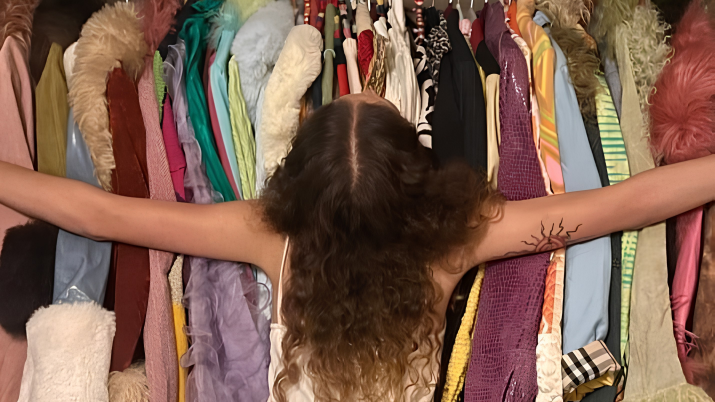
There was a version of me who thought clothes were simply something you put on to avoid being cold or naked in public. Functional, forgettable, the least interesting decision of the morning. It took me a surprisingly long time to realize that what I reach for in the closet is rarely just about temperature or modesty. It's a quiet, daily act of communication, one I'm having with the world before I've said a single word. Fashion, I've come to think, isn't decoration layered on top of who we are. It's one of the more honest ways we let people see it.
Clothes as a Language Before Words
Long before anyone speaks in a room, their clothes have already said something. A blazer says one thing, a graphic tee says another, a carefully mismatched thrifted outfit says something else entirely. None of these messages are necessarily true, but they're read instantly, and we all do the reading whether we mean to or not.
What's interesting is how much of this language we absorb without ever being taught it formally. Nobody sits you down and explains that an oversized silhouette can read as relaxed confidence, or that a monochrome outfit can read as intentional and composed. You just learn it, the same way you learn tone of voice, by watching people react to each other for years. By the time you're old enough to actually choose your own clothes, you're already fluent in a language you never remember studying.
Dressing as Identity, Not Decoration
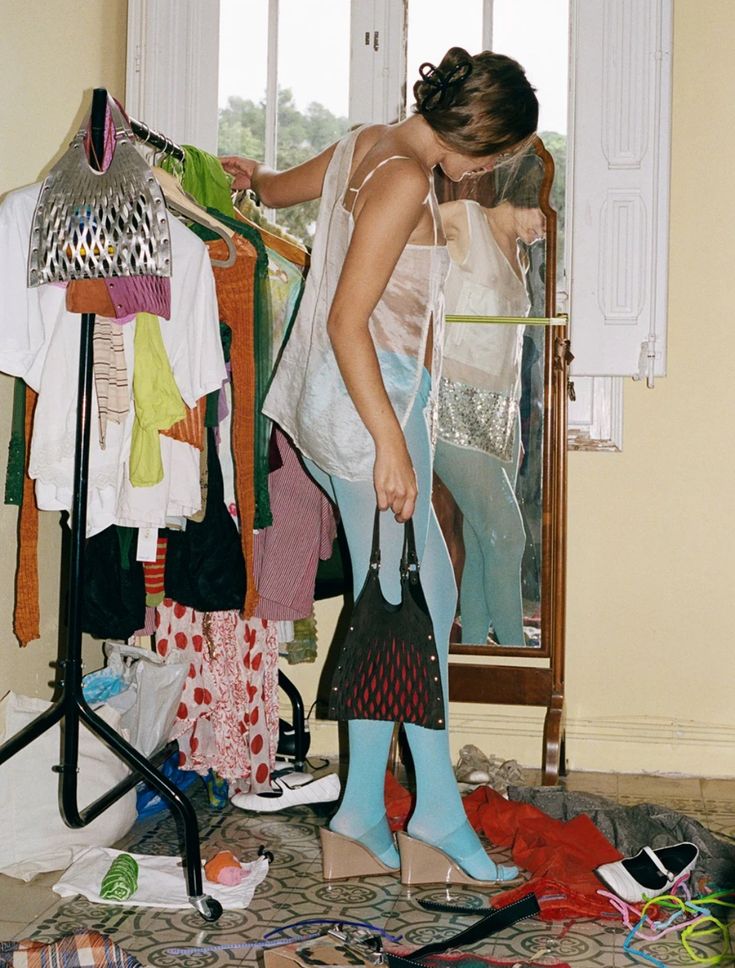
For a long time, I treated fashion as something that happened after identity, a costume added on top of the "real" me. What changed my mind was noticing how differently I felt in certain outfits, not just how I looked, but who I seemed to become. A structured jacket made me stand straighter and speak with more edge in my voice. A soft, oversized sweater made me gentler, slower, more willing to listen than to perform.
That wasn't decoration. That was identity, expressed through fabric instead of words. The clothes weren't hiding who I was, they were letting a particular version of me step forward for the day. I think this is why getting dressed can feel so strangely significant some mornings and completely irrelevant on others. Some days you're choosing an outfit. Other days you're choosing which version of yourself gets to lead.
The Freedom of Personal Style
One of the quiet joys of fashion is that, unlike most forms of self-expression, it requires no permission and very little explanation. You don't need training to wear color, texture, or shape in a way that feels like you. You don't need anyone's approval to pair something unexpected together simply because it makes you smile in the mirror. Writing takes years to get good at. Music takes practice. Fashion, at its most personal, just takes honesty about what actually feels like you, and the willingness to wear it anyway.
I remember the first time I wore something a little unusual, an oversized vintage coat that didn't match anything else I owned, and caught a stranger's eye on the street. Instead of feeling embarrassed, I felt oddly seen. Not because the coat was flattering in any conventional sense, but because it was mine in a way nothing else in my closet quite was yet. That's the freedom fashion offers that a lot of other creative outlets don't: it's public, immediate, and entirely low-stakes if you decide tomorrow you'd rather be someone slightly different.
There's also something quietly democratic about this particular freedom. You don't need a gallery to display it or an audience to validate it. It exists the moment you step outside, in the ordinary act of walking to the store or sitting on a train. Nobody has to approve it, commission it, or publish it for it to count as real self-expression. That immediacy is rare, and I think it's part of why fashion sneaks up on people as an art form. It doesn't ask to be taken seriously the way painting or music does, so we often underestimate how much of ourselves we're actually putting into it every single day.
Fashion as Emotional Expression
Clothes don't just express who we are, they often express how we're feeling, sometimes before we've consciously admitted it to ourselves. There's a reason people reach for soft, comforting fabrics on hard days, and bold, structured pieces on days they need to feel unstoppable. I've noticed my own wardrobe quietly track my emotional state better than my journal does some weeks. A stretch of oversized, muted outfits usually means I'm tired or withdrawn. A sudden reach for color and pattern usually means something in me is finally ready to be seen again.
This emotional dimension is part of why fashion can feel so deeply personal, and also why criticism of someone's outfit can sting more than it seems like it should from the outside. You're rarely just critiquing fabric. You're brushing up against whatever that person was quietly trying to say that day.
Culture, Community, and Belonging
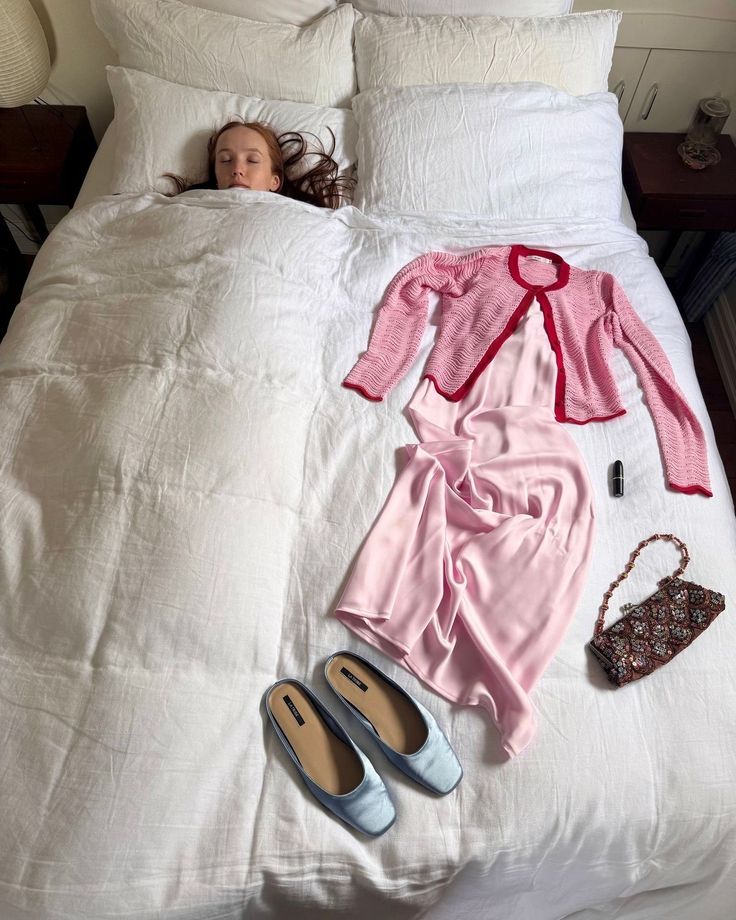
Fashion doesn't only express the individual. It expresses where we come from and who we belong to. A traditional pattern worn at a family gathering, a particular silhouette tied to a subculture, a color combination that instantly signals a shared identity to anyone who recognizes it, all of these carry meaning that stretches far beyond personal taste. Wearing something rooted in your culture or community can feel like a quiet form of belonging, a way of saying I'm part of this, even in a room full of strangers.
At the same time, fashion has always been a space where people borrow, blend, and reinvent. Subcultures build entire visual languages out of shared references, and those languages evolve as people take what resonates and leave what doesn't. This constant blending is part of what keeps fashion alive rather than static. It's rarely one fixed thing. It's a living conversation between where we come from and who we're becoming.
When Fashion Becomes a Mask Instead of a Mirror
Not every use of fashion is genuinely expressive, and it's worth being honest about that. Sometimes clothes become armor instead of expression, a way of controlling exactly how much of ourselves we let anyone see. There's a difference between dressing in a way that reveals you and dressing in a way that hides behind a trend simply because it's safer than being noticed for who you actually are.
I've done both. There were years I dressed almost entirely to disappear, choosing the most neutral, unremarkable version of every outfit so nobody would have anything to comment on. It wasn't self-expression. It was self-protection wearing the same clothes as everyone else. The shift toward actual expression happened slowly, and mostly through small moments of choosing something slightly bolder than felt comfortable, and noticing that the world didn't end when I did.
Style as an Evolving Story
Perhaps the most honest thing about fashion as self-expression is that it's never finished. Look back at old photos of yourself and you'll probably wince at a few choices, not because they were wrong, but because they were true to a version of you that no longer exists. That's not embarrassing. That's just what growth looks like when it happens to be photographed.
Your current style isn't a final statement either. It's simply where you are right now, expressed in color, shape, and texture, the same way your handwriting or the way you talk has shifted slightly over the years without you noticing it happen in real time.
Wearing Yourself Out Loud
In the end, fashion is one of the few forms of self-expression that everyone participates in, whether they think of themselves as stylish or not. Even choosing not to think about your clothes is itself a kind of statement. There's no neutral option, only degrees of intention.
What's changed for me isn't that I suddenly became more "fashionable." It's that I stopped treating getting dressed as a chore to get through and started treating it as a small, daily chance to say something true, even if the only person who ever fully understands the message is me.


Comments
Comments are coming soon!
We're working on adding a comment system to engage with our readers.